
“Of course you should go to the one on the beach.”
“Yeah, I think I’m probably going to the one by the beach. It is also probably better for tomorrow’s paddle boarding.”
And so I kept talking with my friend over the phone for the last kilometers of my drive. This time I literally mean the very last kilometers. My journey had started the night before in Helsinki. From there I had taken an early morning drive to Turku to catch the 8:45 ferry to Stockholm, arriving shortly before 19:00. Dinner with friends quickly turned into chaos, mostly due to my friend demonstrating just how much fun you can have with an electric car. Let’s leave it at that.
I had planned to drive as far as possible to cut down my roughly 800 kilometer journey south, but meeting friends meant that the evening ran late. I ended up booking a campsite in Västerås, about 100 kilometers from Stockholm. They were supposed to offer check-in via key boxes until midnight. I never received the SMS I was expecting, and I could not reach them by phone either. When I arrived after reception hours, I was greeted by a locked gate and a dark building with no lights on. Still no message.
A group of people who looked like they might be employees were leaving the campsite, so I stopped them and explained my situation. They were indeed staff, and it turned out that my key simply was not in any of the boxes. For some strange reason. We came to the shared conclusion that I had been very lucky. Five minutes later and I would not have been able to get inside at all. I was completely exhausted after waking up around 4:30 in the morning, and setting up a tent in total darkness turned into a complete mess. Messy enough that someone eventually came over to offer me a better light.
There was no real hurry the next day other than a stormy weather system approaching western and southern Norway from Ireland. The previous days had been classic Scandinavian summer, warm and calm, but realistically I only had one proper chance to do what I had driven all this way for. I needed to reach Mandal in time for sunset.
Driving through the white wooden houses of the town, I continued talking with my friend on the phone. When I arrived at the campsite, I realized immediately that I was not alone. It was bustling. There was even a queue inside reception, and the receptionist had just sent a motorhome away because there was simply no room left.
When it was my turn, I explained that I was looking for a place to stay for the night and that I had a car and a tent. After a short pause, she said that they were fully booked, but she could do me a favor. There is always room for one more tent. The last one, for you.
At that moment, I had no mental capacity to think about anything except the following day. My focus was already on the idea that I could leave my car here and start paddle boarding straight from the campsite beach. That idea felt better and better. I also asked if there might be room for another night, but she explained it was too early to say. Everything had been sold out long ago.
Then came the shock. The price was 700 Norwegian kroner for a tent spot. Over 60 euros. Easily the most I have ever paid for a tent. Hotel prices, almost. Expensive, but it was late, and I had no intention of driving elsewhere. I tried to rationalize it. This would be much easier than trying to find parking and a suitable launch point for the paddle board somewhere else.
But apparently the universe disagreed.
I could not pay with my phone, so I went back to the car to get my physical card. That failed too. The receptionist explained that the payment provider was experiencing Nordic wide issues, so it was unlikely to work at all. She suggested that I could either return in the morning or pay via a link later. That was fine with me.
Driving inside the campsite, I was amazed at how packed it was. Motorhomes everywhere, every spot taken. Add some music and it would have felt like a festival rather than a calm Norwegian coastline. I found a narrow space between other tents near the beach and parked my car outside the actual campsite as instructed. I tried the payment link again. Still nothing.
Instead, I walked down to the beach.
The beach faced southeast, while the sun was setting in the opposite direction. Still, the red and purple colors in the sky, combined with the complete lack of wind, created a calm and almost unreal atmosphere. This was where I was supposed to set off for my attempt to reach Pysen, the southernmost point of Norway, and I was standing here, doing nothing.
Boats passed occasionally in the distance. Music drifted in from somewhere far away. The next day, the wind was forecast to be stronger, but still manageable. Or so I hoped.
I was not sure if I could see my destination. The Ryvingen lighthouse was visible far away, but Pysen was likely hidden behind the furthest peninsula I could make out. I could have driven closer and shortened the journey, but my plan B felt right. It was summer, after all. What could be better than this?
The morning arrived. I had set my alarm for 7:00, intending to leave early. Reality had other plans. Packing the tent, eating breakfast, moving gear, carrying everything to the beach, and inflating the paddle board took time. It was closer to 8:00 when I finally pushed off.
The wind was southwesterly. Reassuring in that it would not push me out to open sea, but also unhelpful. It offered no assistance. It did not take long to realize this would be a long and demanding day. Even with wind speeds around 10 meters per second, progress was slow. I had to paddle in zigzags just to move forward. Any pause meant being turned completely around, and getting back on course took real effort.
I thought I had prepared well. Sunscreen, lip protection, a thin neck warmer I had bought before climbing Iceland’s highest peak. What I lacked, I realized far too late, was food and water.
On a day like this, your thoughts narrow. One paddle stroke at a time. My plan was to use the islands as protection and aim for Skjernøya. Whenever I found a small bay, I tried to rest, but even there the wind pushed me relentlessly toward the rocks. At some point my legs began to burn. Whether from jellyfish or plants, I never found out.
Calls started coming in from a Norwegian number. I knew what that meant. I still had not paid for the campsite.
After Skjernøya, everything changed. The wind became a real threat. Approaching directly from the north or west felt impossible. I feared being pushed straight back northwest. I decided to paddle around the other side of Sandøya, reasoning that the worst outcome would be being pushed onto its shore.
That decision nearly broke me.
Paddling along the east side of Sandøya was brutal. Wind and currents shoved me closer and closer to the rocks. I paddled in place, going nowhere. Exhausted, dehydrated, and nearly out of energy, I was ready to give up completely.
I used what little strength I had left to reach the western side of Sandøya, where the island offered shelter. There I did nothing for a while. I let the wind do what it wanted. All my hard-earned progress disappeared. Boats passed by, indifferent. I needed time. I needed ground under my feet.
There was a bay on this side, filled with boats. I had noticed it earlier. Standing there, I began to wonder if approaching Pysen from this direction might not be as bad as I had feared. I could at least try.
Dragging myself toward the bay, I felt every stare. People on boats and on shore watched as if something had landed from another planet. I did not know why I had come here anymore. My legs burned. I must have looked ridiculous. But I could reapply sunscreen, drink a little, and think.
The stretch between Skjøringa and Skjernøya was suddenly easy. For the first time all day, paddling felt almost enjoyable. Emerging from a natural channel, I realized it was not as bad as expected. Windy, yes, but manageable.
I still could not see Pysen clearly. I aimed instead for a small island called Litleodd. From there, I was certain. An islet less than 300 meters away. How hard could it be?
I almost felt victorious.
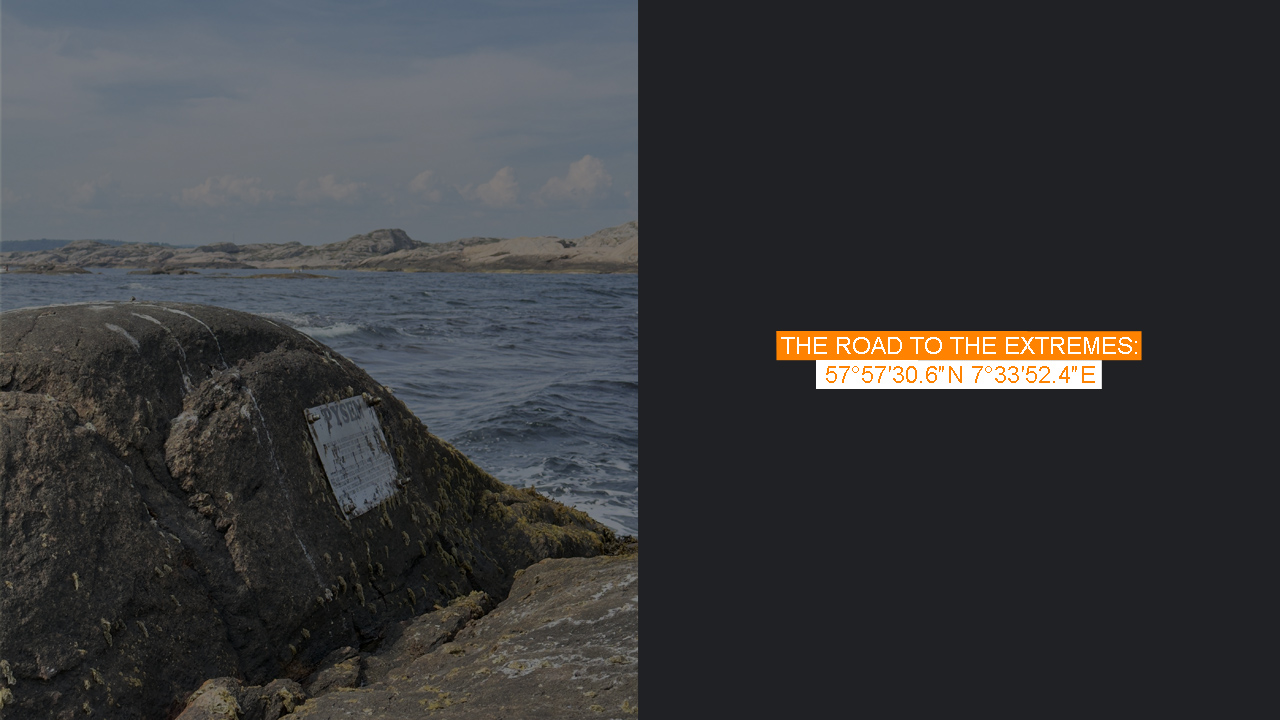
Reaching Pysen itself was tricky. Currents made it difficult to stop, and I could only wedge the nose of the paddle board briefly against the rock. I did not have long. But there it was. The plaque. Coordinates. Confirmation that this was indeed the southernmost point of Norway. Or at least the southernmost before Antarctica.
A motorboat anchored nearby. It was time to leave.
The return journey was easier. The wind helped, a little. I looked back at Pysen once more and noticed the people from the boat swimming toward it. Another way to do it, I thought, before disappearing back into the channel.
The way back still felt endless, even if it was less demanding. Slowly, I made progress toward the beach I had left that morning.
Later in the evening, a boat sped past, then slowed and turned toward me. It was the same couple from earlier. They had seen me at Pysen and wanted to know who this crazy person was. Their encouragement felt absurdly good.
After roughly eleven hours, I reached shore. People were sunbathing. Playing volleyball. I was completely spent. I still had to pack everything and carry it to the car. I had dreamed of proper food for hours, but after returning the key card to the box, I simply drove away. I had finally paid for the campsite earlier. That would have to be enough.
I drove to another campsite where I had planned to stay. They had room. I pitched my tent and drove into town for a fast food burger. I must have looked like something else entirely. My shirt was white with salt. My legs were burned raw.
Back at the campsite, I washed my gear. I was not sure it would dry overnight. Clouds were coming in, wind was rising. But one thing was certain.
I would sleep deeply.